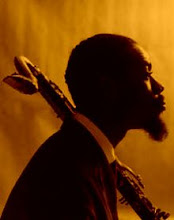
A few days ago 75 year old jazz piano icon Ramsey Lewis proved he's still got plenty left in the tank -after announcing a revival of his 1974 classic "Sun Goddess", in it's entirety via a nationwide tour later this year. Ramsey posted a video of his plans...
Here's a little perspective for the uninitiated. In 1973 Lewis, like many jazz musicians at that time, was in the midst of an experimental period; he disbanded his original, hit making acoustic trio (responsible for "The In Crowd" among others) and started working on ways to blend his growing interests in funk and electronic music. Along the way Lewis hooked up with his former drummer, Maurice White, who had just formed a new band, Earth, Wind & Fire, which as we now know, blended jazz and electronic music with funk and R&B. It was a match made in heaven. Lewis and White, who were both living in Chicago, combined forces and the first fruit of their reunion - Sun Goddess, which also featured Earth, Wind and Fire, was released in 1974 and quickly exploded with solar proportion - eventually selling more than a million copies. Sun Goddess was a bold move is a modest interpretation, Ramsey knew his fans from back in the day would be highly offended by this turn of events, but he did it anyway because this was the dawning of a new day - nothing said that more than the 8 minute length of the title track; Lewis' biggest hits before that (In Crowd Hang On Sloopy Wade in the Water) were no more than 5 min and were acoustic trio settings. And much to the chagrin of the short sighted among his following, the unprecedented success of Sun Goddess meant there was no turning back. In fact, Lewis has always been a forward thinking kinda guy so this shift in his focus during the 1970's makes perfect sense. Ironically, his most recent work has been more like what we remember of the days before Sun Goddess which makes his announcement all the more surprising. Today, Lewis has 80 recordings to his credit and Sun Goddess is by far his most popular and for many, his most memorable. Check out the original recording of Ramsey's opus here.
Thursday, January 6, 2011


Tuesday, January 4, 2011
THE SONG AND THE STORY: BIRDLAND
From the day of it's release in 1977, every time you heard it, you knew 2 things - you had never heard anything like it and this was something special. Energy, sophistication, soul. Birdland. The song that made it's composer - Joe Zawinul - and his band, Weather Report world famous. Where did this defining source of inspiration come from?
Weather Report performing Birdland in 1978, Stadthalle Offenbach.
Weather Report performing Birdland in 1978, Stadthalle Offenbach.
It's autumn 1944 - the end of World War Two in Europe is just months away and thousands of Allied bombs are falling on Vienna, Austria. At he prestigious Vienna Conservatory, a twelve -year old pianist named Josef Erich Zawinul is among 28 students being evacuated to a large estate in the Czech Sudentenland, where they will continue studies while being forced to endure a regimented life that includes war training under the direction of injured German SS officers. It is here that Zawinul hears jazz for the first time when a fellow student performs an impromptu version of "Honeysuckle Rose".

For a musical impression of this period in Joe's life, listen to this - "Unknown Soldier" - from his autobiographical symphony Stories of the Danube
In the years immediately following the war, Europe is feeling the influence of the occupying Americans and Zawinul's interest in jazz deepens; he becomes a professional musician playing in clubs on American military bases, he becomes a fan of Armed Forces Radio and he becomes a reader of Down Beat magazine where he see an advertisement for the Berklee School of Music. In 1958 Zawinul applies for and wins a scholarship to Berklee and on January 2 1959 Zawinul boards an ocean liner headed for America with $800 (6000 in 2010 $$) in his pocket. 5 days later, the ship arrives in New York City and Zawinul's impromptu tour of the city begins at 1678 Broadway, corner of 52nd Street, known as the "The Jazz Corner of the World" - the location of the world's most famous jazz club, Birdland.

Named for legendary saxophonist Charlie "YardBird" Parker, the venue was celebrating it's 10th anniversary when Zawinul visited for the first time; later, whenever Zawinul and wife of 40 years, Maxine celebrated their wedding anniversary, thoughts inevitably turned to Birdland, which is were they first met.
The Manhattan Transfer performing Birdland in Tokyo, 1986


Fast forward a couple decades and Joe Zawinul's resume is jam packed with important roles with Maynard Ferguson's big band, Cannonball Adderley's quintet and Miles Davis' super-group, where he met saxophonist Wayne Shorter.By end of 1975 the two men are co-leaders of Weather Report, the preeminent jazz band of seventies, in the middle of recording the legendary album Black Market.
For a musical impression of this period in Joe's life, listen to this - "Unknown Soldier" - from his autobiographical symphony Stories of the Danube
In the years immediately following the war, Europe is feeling the influence of the occupying Americans and Zawinul's interest in jazz deepens; he becomes a professional musician playing in clubs on American military bases, he becomes a fan of Armed Forces Radio and he becomes a reader of Down Beat magazine where he see an advertisement for the Berklee School of Music. In 1958 Zawinul applies for and wins a scholarship to Berklee and on January 2 1959 Zawinul boards an ocean liner headed for America with $800 (6000 in 2010 $$) in his pocket. 5 days later, the ship arrives in New York City and Zawinul's impromptu tour of the city begins at 1678 Broadway, corner of 52nd Street, known as the "The Jazz Corner of the World" - the location of the world's most famous jazz club, Birdland.
Named for legendary saxophonist Charlie "YardBird" Parker, the venue was celebrating it's 10th anniversary when Zawinul visited for the first time; later, whenever Zawinul and wife of 40 years, Maxine celebrated their wedding anniversary, thoughts inevitably turned to Birdland, which is were they first met.
The Manhattan Transfer performing Birdland in Tokyo, 1986
Fast forward a couple decades and Joe Zawinul's resume is jam packed with important roles with Maynard Ferguson's big band, Cannonball Adderley's quintet and Miles Davis' super-group, where he met saxophonist Wayne Shorter.By end of 1975 the two men are co-leaders of Weather Report, the preeminent jazz band of seventies, in the middle of recording the legendary album Black Market.
Before the record could be finished, bassist Alphonso Johnson leaves the band and Zawinul hires a 24 year old bass bass player from Ft. Lauderdale Fl. named John "Jaco" Pastorius("Black Market" photo session at left with Pastorius in the middle). Jaco has been writing letters to Zawinul for years, even going as far as calling himself "The World's Greatest Bass Player" upon meeting Zawinul a few years before. Eventually Zawinul & Shorter relent and ask Pastorius to record a couple of tunes for the unfinished album including "Cannonball", a tribute to the recently deceased Adderley (another Florida native). Pastorius then joins the band for their upcoming European tour and Zawinul is so impressed that he says Jaco is Weather Report's "catalyst." He's invited to stay on for work on the recording of the album Heavy Weather and the band's popularity explodes after the world hears Pastorius's bass playing and singing on the LP's first track - Birdland.
Jaco Pastorius, on the road with Weather Report for the first time, Montreux 1976
As Zawinul put it , "I heard him (Pastorius) play 4 bars and I knew history was being made." Indeed, the new man in the bass chair provided the consummate and transformational mix of virtuosity and showmanship that took the band from an jazz fusion experiment into huge commercial and critical success. Not to take anything away from the immensely gifted Alphonso Johnson but, hearing his style then or now makes it virtually impossible to imagine him playing those signature and (as Zawinul correctly said) "historic" licks that make Birdland what it is today - an unqualified classic. Just ask Quincy Jones or the scores of musicians who have performed or recorded it.

Birdland provides a rare snapshot of legendary, game changing musicians at peak performance - as a group Weather Report was never better, the chemistry of Zawinul et al. at the time of it's recording elicited a rare combination of critical and commercial accolades; Heavy Weather is the best selling album in the band's history - one million and counting - and the litany of awards included jazz album of the year- 1977. Birdland became a hit single, unheard of for jazz music then and certainly now. Zawinul & Shorter were also at their creative high-water marks as collaborators and were beginning to explore new avenues as solo artists and would eventually call it quits (Zawinul would try to carry on the spirit in a new band - Weather Update, which only lasted a year). Jaco left the band in 1980, although every bass player that followed seemed to be a respectful emulation of what was now know as the "Jaco" sound. Indeed, many fans felt the band's history ended when Jaco left and it is ironic that he died tragically in 1986, the same year Weather Report ceased to exist.
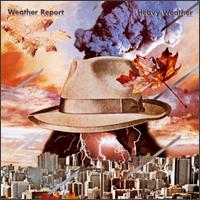
Birdland provides a rare snapshot of legendary, game changing musicians at peak performance - as a group Weather Report was never better, the chemistry of Zawinul et al. at the time of it's recording elicited a rare combination of critical and commercial accolades; Heavy Weather is the best selling album in the band's history - one million and counting - and the litany of awards included jazz album of the year- 1977. Birdland became a hit single, unheard of for jazz music then and certainly now. Zawinul & Shorter were also at their creative high-water marks as collaborators and were beginning to explore new avenues as solo artists and would eventually call it quits (Zawinul would try to carry on the spirit in a new band - Weather Update, which only lasted a year). Jaco left the band in 1980, although every bass player that followed seemed to be a respectful emulation of what was now know as the "Jaco" sound. Indeed, many fans felt the band's history ended when Jaco left and it is ironic that he died tragically in 1986, the same year Weather Report ceased to exist.
Monday, January 3, 2011
BASSIST CHARLES FAMBROUGH: 1950 - 2011.
(from Jazz Times)
Jazz Bassist Charles Fambrough Dies
Philadelphia-based acoustic bassist performed with McCoy Tyner, Art Blakey and Wynton Marsalis
Bassist Charles Fambrough died on January 1, 2011. He had been ill for last few years, battling end stage renal disease, congestive heart failure and pulmonary hypertension. He had been receiving dialysis treatments as well. He was 60 years old at the time of his death.
Fambrough was born in Philadelphia on August 25, 1950. Originally trained on the piano, Fambrough received a scholarship to study classical music, but picked up the bass at age 13, eventually leaving school to pursue his true passion in jazz as a bassist. By 1968 he was performing professionally in various pit bands around the city.

Charles Fambrough
In 1970 Fambrough joined Grover Washington Jr.’s band with whom he played for over three years, while the saxophonist experienced his first commercial success. After a stint with Airto Moreira and Flora Purim, he then joined the band of fellow Philadelphian McCoy Tyner, appearing on Tyner’s albums Focal Point, The Greeting, and Horizon. He later joined the Art Blakey Jazz Messengers in the early 80s, when that band featured Wynton and Branford Marsalis. When Wynton Marsalis left Blakey to record and tour as a leader, Fambrough was a part of his group, and was featured on Marsalis’Fathers and Sons album for Columbia.
Fambrough also had considerable experience playing Latin jazz, as a sideman with Airto Moreira and Flora Purim, as well as Jerry Gonzalez and the Fort Apache Band. Fambrough also regularly performed and recorded with pianist Bill O’Connell.
Fambrough recorded over six albums as a leader, including The Proper Angle andBlues at Bradleys for CTI, City Tribes on Evidence, Upright Citizen on NuGroove, andLive at Zanzibar Blue on Random Chance. He was a first-call bassist in his hometown for his entire life, backing artists such as Shirley Scott and Bootsie Barnes at local venues like Ortliebs, Zanzibar Blue and Chris’s Café.
He was an accomplished composer who wrote often complex and diverse songs for his own band as well as others. However, despite an emphasis on complex harmonies and rhythms, it was always important to him that the melody was there. In 1997 he told Kimberley Berry for All About Jazz: “I try to make a melody that you can sing, but once the melody is gone, you have to know what you're doing. If not, it's over. You can't "hear" it; you have to "know" it. There are musicians who have great ears who can hear anything, so it can be dealt with. There are certain things, it's better to know. That way you can elaborate.”
Bassist Gerald Veasley, who also played with both McCoy Tyner and Grover Washington, Jr., counted Fambrough as a mentor, and for a short time, as a neighbor in a small community in New Jersey. "Charles happened to be a neighbor of mine for about four years," said Veasley. "I was broke but ambitious. He was a force on the bass and very much in demand. Charles would invite me over his house from time to time to show me a song or concept he was working on. Even though most of the time it was over my head, I appreciated his taking me under his wing. Think about it: An established musician coaching a struggling one. What could be truer to the jazz tradition than that?"
Fambrough had a big robust sound on the acoustic bass and was well-respected by his peers and jazz fans. The Philadelphia jazz community had held a few fundraisers and celebrations for Fambrough including a recent one on December 8 at the Clef Club attended by Stanley Clarke, Lenny White, Wallace Roney, Pat Martino, John Blake and Veasley among many others.
Saturday, January 1, 2011
JAZZ-SEARCHING FOR THE PERFECT START TO A NEW YEAR...
We all look for some sort of inspiration to find the right frame of mind with which to begin the new year. Some of us party until it hurts; others spend the occasion in quite reflection. In a tradition that spans geographical, cultural and ethnic distinctions, my parents and grandparents considered the consumption of certain food dishes on New Year's Day to be fortuitous; I follow their lead every year by cooking something that might bring me much needed luck in the months ahead. There were many choices to consider; last year I had collard greens & cole slaw (for money), my German neighbor had sauerkraut and pork chops, my aunt ate black eyed peas (again, for money).
 This year I had a greek salad (any greek food will do, for prosperity) and I enlisted the assistance of 2 outstanding jazz musicians - Grammy Award-winning pianist Michel Camilo, from the Dominican Republic and Marcus Roberts, the celebrated pianist and Florida native.
I found their recipes for New Year's Day- appropriate dishes in a cookbook called "Jazz Cooks: Portraits and Recipes of the Greats", written by Bob Young and Al Stankus; published in 1992 by Stewart Tabori Chang. You'll find dozens of recipes, anecdotes and wonderful photos by Deborah Feingold.
 Michel Camilo's Dominican-style Roast Pork
Ingredients
juice of 3 naranja agria or 2 grapefruits

Place ham hocks for 15 min in water, bring to boil, reduce to simmer
This year I had a greek salad (any greek food will do, for prosperity) and I enlisted the assistance of 2 outstanding jazz musicians - Grammy Award-winning pianist Michel Camilo, from the Dominican Republic and Marcus Roberts, the celebrated pianist and Florida native.I found their recipes for New Year's Day- appropriate dishes in a cookbook called "Jazz Cooks: Portraits and Recipes of the Greats", written by Bob Young and Al Stankus; published in 1992 by Stewart Tabori Chang. You'll find dozens of recipes, anecdotes and wonderful photos by Deborah Feingold.
Ingredients
juice of 3 naranja agria or 2 grapefruits
juice of 10 lemons
6-7lb picnic shoulder, bone in
10 garlic cloves mashed
two tsps onion powder
2 tsps salt, pepper to taste; 2 tsps oregano
One night before, squeeze juice from naranja & lemon - remove seeds
place pork in non reactive pan with tight fitting lid
pour juices over meat
cover meat w/garlic onion pwdr salt, oregano & pepper
cover pan, refrigerate overnight
cook in oven at 350 for 5 hrs
basting pork every 45 min
after 5 hrs, raise temp to 450
uncover for additional 15 min
allow meat to sit at room temp for 15 min before serving
Marcus Roberts' Black Eyed Peas Okra Ham Hock Stew
Ingredients
3 ham hocks
3 16 oz cans black eyed peas
2 lg. cans whole tomatoes
1 lb okra sliced thickly
3tps sugar; salt & pepper to taste
Place ham hocks for 15 min in water, bring to boil, reduce to simmer
add black eyed peas
add tomatoes for 15 min of cooking
add other ingredients and cook for 35 min.
And for a more than adequate soundtrack to your culinary activities, check out another pianist - Randy Weston - and his 1964 release "African Cookbook"
And for a more than adequate soundtrack to your culinary activities, check out another pianist - Randy Weston - and his 1964 release "African Cookbook"
Friday, December 31, 2010
Legendary jazz pianist and educator Billy Taylor, a D.C. native,
dies at 89
(From Capitol Bop)

Courtesy Tom Marcello
D.C. native Dr. Billy Taylor was an NEA
Jazz Master and renowned educator.
by Giovanni Russonello
Dr. Billy Taylor, a D.C. native as famous for his work as a educator and proselytizer as for his formidable skills as a pianist, died yesterday at 89.
Taylor grew up in the District, attending Dunbar High School and taking piano lessons from Henry Grant — the same local legend who taught Duke Ellington to play the keys. After graduating from Virginia State College in 1942, Taylor headed for New York City, where the bebop revolution was about to sweep across the city and the entire jazz world. He quickly earned a spot playing with saxophone legend Ben Webster and an apprenticeship with the great Art Tatum. Eventually, he became the house pianist at Birdland jazz club in Midtown Manhattan, where he played with Charlie Parker, Dizzy Gillespie, Miles Davis and numerous others.
Taylor expanded his repertoire as a Broadway musician, a player in Machito’s famous Afro-Cuban band and a member of the Don Redman Orchestra’s European tour in 1948 — the first such venture by an American jazz group since the end of World War II.
But Taylor’s strongest legacy is as a jazz teacher and international spokesperson: He earned a doctorate in music education from the University of Massachusetts in the 1970s, and performed hundreds of free concerts across the globe throughout his life. He also frequently took to the airwaves to spread the jazz gospel. His work in media started in 1958, when he was musical director at The Subject Is Jazz, a National Educational Television show and the first dedicated to jazz. He did profiles of musicians on CBS’ Sunday Morning, and was a frequent producer for PBS. His most famous work in radio was probably the National Public Radio program Billy Taylor’s Jazz at the Kennedy Center, which he broadcast weekly from the hometown venue where he long served as artistic director for jazz.
Taylor penned over 300 compositions, including the classic civil rights rallying cry “I Wish I Knew How It Would Feel to Be Free.” He was named a National Endowment for the Arts Jazz Master and received the National Medal of Arts, among scores of honors and prizes.
Taylor is survived by his wife, Theodora, and his daughter, Kim Taylor-Thompson.
Tuesday, December 21, 2010
JAZZ UNDER THE CHRISTMAS TREE
The attack of the sonic mistletoe - holiday music is everywhere! But have you noticed how even the most banal, hackneyed Christmas song - (and I say Christmas because The Klezmer Dreydle has yet to hit the mainstream...) sounds so much better when put in a "jazz context"? One might consider that when playing holiday music for broad appeal such as on the radio (hearing Louis Armstrong on the local "Light FM" greatly improved my opinion of "Rudolf The Red Nosed Reindeer") or as accompaniment to holiday cheer in a social setting. Where to start? These are among the best...
 Duke Ellington Orchestra - The Nutcracker Suite: Ellington Strayhorn Tchaikovsky - Columbia
As the saying goes, "start here" because it doesn't get any better than this - Ellington and Strayhorn at their creative and organizational plateau; an orchestra that is uniquely suited for the material; the blessing (and watchful eye) of Peter Illych himself. Many consider this Tchaikovsky's greatest work and you can hear the love and respect Ellington and "Strays" have for it ; the composer's intended pageantry & mirth are augmented by the requisite Ellingtonian imagination and depth. The original recording is out of print but you can find the music on a CD release called "Three Suites".
Verve Remixed Christmas - Various Artists - Verve

Crazy imaginative and entertaining reinventions of Louis Armstong's "Z'at You Santa Claus", Shirley Horn's "Winter Wonderland" and Jimmy Smith's "God Rest Ye Merry Gentleman" (unusual to begin with!) along with songs that evoke the season - "Chilly Winds Don't Blow"(Nina Simone) "Good Morning Blues" ( Count Basie) and an outlandish reggae remix of "I Got My Love To Keep Me Warm" by Billie Holiday.
GRP Christmas Collection Vol 1-3
 The collection shows how incredibly deep the creative juices flowed at GRP Records; every possible jazz avenue is explored commendably by a prominent cast in 28 tracks - Acoustic Alchemy, Patti Austin, B.B. King, Chick Corea, Ramsey Lewis, Arturo Sandoval, Tom Scott, Diane Schuur, Spyro Gyra and Yellowjackets, to name a few.
Ledisi - It's Christmas - Verve

As to be expected, Ledesi finds new territories in the holiday musical repertoire with her breathtaking gift for re-imagination; Don't start the party without it.
 Jingle Bell Jazz - Various Artists - Columbia
A Windham Hill Christmas - Various
Jazzy Wonderland - Various - Columbia

Stan Kenton - A Merry Christmas - Capitol
Spyro Gyra - A Night Before Christmas -
 Ella Fitzgerald - Ella Wishes You A Swingin Christmas - Verve
Jimmy Smith - Christmas Cookin' - Verve
Chris Botti - December - Columbia

Ramsey Lewis - The Sound Of Christmas -
Booker T And The MG's - In The Christmas Spirit
Boney James - Christmas Present - Concord
Tony Bennett/Count Basie Big Band - A Swingin Christmas

Bob James - Christmas Eyes - Koch
Yule Struttin - Various Artists - Blue Note

Latin Jazz Christmas - Various - Concord
Luis Villegas - Guitarras De Navidad - Tenure
 Dave Koz and Friends - Smooth Jazz Christmas - Capitol
David Benoit - Remembering Christmas - GRP
Peter White Christmas - ARTizen
Kenny Burrell - Have Yourself a Soulful Little Christmas - Verve

As the saying goes, "start here" because it doesn't get any better than this - Ellington and Strayhorn at their creative and organizational plateau; an orchestra that is uniquely suited for the material; the blessing (and watchful eye) of Peter Illych himself. Many consider this Tchaikovsky's greatest work and you can hear the love and respect Ellington and "Strays" have for it ; the composer's intended pageantry & mirth are augmented by the requisite Ellingtonian imagination and depth. The original recording is out of print but you can find the music on a CD release called "Three Suites".
Verve Remixed Christmas - Various Artists - Verve

Crazy imaginative and entertaining reinventions of Louis Armstong's "Z'at You Santa Claus", Shirley Horn's "Winter Wonderland" and Jimmy Smith's "God Rest Ye Merry Gentleman" (unusual to begin with!) along with songs that evoke the season - "Chilly Winds Don't Blow"(Nina Simone) "Good Morning Blues" ( Count Basie) and an outlandish reggae remix of "I Got My Love To Keep Me Warm" by Billie Holiday.
GRP Christmas Collection Vol 1-3
The collection shows how incredibly deep the creative juices flowed at GRP Records; every possible jazz avenue is explored commendably by a prominent cast in 28 tracks - Acoustic Alchemy, Patti Austin, B.B. King, Chick Corea, Ramsey Lewis, Arturo Sandoval, Tom Scott, Diane Schuur, Spyro Gyra and Yellowjackets, to name a few.Ledisi - It's Christmas - Verve
As to be expected, Ledesi finds new territories in the holiday musical repertoire with her breathtaking gift for re-imagination; Don't start the party without it.
Jingle Bell Jazz - Various Artists - ColumbiaA Windham Hill Christmas - Various
Jazzy Wonderland - Various - Columbia

Stan Kenton - A Merry Christmas - Capitol
Spyro Gyra - A Night Before Christmas -

Jimmy Smith - Christmas Cookin' - Verve
Chris Botti - December - Columbia
Ramsey Lewis - The Sound Of Christmas -
Booker T And The MG's - In The Christmas Spirit
Boney James - Christmas Present - Concord
Bob James - Christmas Eyes - Koch
Yule Struttin - Various Artists - Blue Note

Latin Jazz Christmas - Various - Concord
Luis Villegas - Guitarras De Navidad - Tenure
 Dave Koz and Friends - Smooth Jazz Christmas - Capitol
David Benoit - Remembering Christmas - GRP
Peter White Christmas - ARTizen
Kenny Burrell - Have Yourself a Soulful Little Christmas - Verve

Friday, December 10, 2010
JAMES MOODY: 1925-2010
He will be missed. Read Peter Keepnews' New York Times obit.... and this story on the NPR music page.
Something else to remember him by - a video of James with The WDR Big Band...more words and music to come.
James Moody & WDR Big Band - There I Go
Uploaded by savelonp. - Watch more music videos, in HD!
Something else to remember him by - a video of James with The WDR Big Band...more words and music to come.
James Moody & WDR Big Band - There I Go
Uploaded by savelonp. - Watch more music videos, in HD!
Subscribe to:
Posts (Atom)